What Is a Connected eBike? Features, Benefits & Technology
The electric bike industry has evolved far beyond motors and batteries. Today’s most advanced eBikes are no longer defined solely by the assistance they provide, but by the digital experiences they enable.
A connected eBike combines electric assistance with intelligent software, smartphone integration, navigation, ride analytics and cloud-based services. The result is a bicycle that can communicate with its rider, provide valuable insights and continuously improve the riding experience.
Whether you’re commuting across the city, exploring new gravel routes or training for longer rides, connectivity is becoming one of the most valuable features available on modern eBikes.
But what exactly does a connected eBike do? How does it work? And why has connectivity become such an important part of modern electric cycling?
This guide explains everything riders need to know about connected eBikes, smart features and the growing role of digital ecosystems in the future of cycling.

What Is a Connected eBike?
A connected eBike is an electric bicycle equipped with digital technologies that allow it to exchange information with external devices, applications and online platforms.
Rather than operating as an isolated machine, a connected eBike becomes part of a broader digital ecosystem where hardware and software work together to provide a more personalised riding experience.
Depending on the system, a connected eBike can provide:
- Real-time ride data
- Smartphone connectivity
- Navigation assistance
- Ride recording
- Battery monitoring
- Assistance customisation
- Performance analytics
- System updates
- Cloud synchronisation
The concept is similar to connected cars or wearable fitness devices. The bicycle generates information during every ride and transforms that data into useful insights that help riders ride further, manage energy more efficiently and better understand their performance.
As rider expectations continue to grow, connectivity is rapidly becoming a defining characteristic of premium eBike systems.
How Does a Connected eBike Work?
From sensor data to insights on your phone – the path information takes on every ride.
How Does a Connected eBike Work?
A connected eBike relies on multiple technologies working together to create seamless communication between the bike and the rider.
At a basic level, sensors throughout the system collect information continuously while riding. This data is processed by the bike’s electronics and then shared through wireless communication technologies such as Bluetooth.
The information is typically displayed through a dedicated mobile application or digital platform.
| Component | Function |
|---|---|
| Sensors | Measure speed, cadence, power, battery status and riding conditions |
| Control Unit | Processes information from the eBike system |
| Bluetooth Connectivity | Enables communication with smartphones and accessories |
| GPS Services | Supports navigation and route tracking |
| Mobile Application | Provides rider access to data and settings |
| Cloud Ecosystem | Stores ride history and synchronises information across devices |

When a rider starts a journey, the system begins collecting information such as:
- Distance travelled
- Current speed
- Average speed
- Elevation gained
- Motor assistance level
- Rider effort
- Battery usage
- Estimated remaining range
This information can then be transformed into meaningful recommendations, statistics and riding insights.
Connected eBike vs. Traditional eBike
Both provide electric assistance – connectivity changes everything around the ride.
The Smart Features That Define a Connected eBike
Connectivity is not simply about displaying data. Modern connected eBikes use smart technology to improve usability, efficiency and enjoyment.
Navigation Without the Guesswork
One of the most appreciated connected features is integrated navigation.
Instead of relying solely on third-party devices, many connected eBike ecosystems allow riders to plan routes directly through a dedicated application.
This provides several advantages:
- Easy route creation
- Turn-by-turn guidance
- Alternative route suggestions
- Route history
- Better trip planning
For many riders, navigation transforms an eBike from a recreational tool into a genuine mobility solution for daily transportation and exploration.
Whether commuting across a city or discovering remote countryside roads, navigation helps remove uncertainty from the ride.
Ride Statistics That Deliver Meaningful Insights
Most cyclists enjoy understanding how they ride.
Connected eBikes make this easier by collecting and organising ride statistics automatically.
Common metrics include:
- Total distance
- Ride duration
- Average speed
- Maximum speed
- Elevation gain
- Calories burned
- Assistance usage
- Battery consumption
The real value comes from identifying patterns over time.
A rider may discover that a different assistance mode improves efficiency during daily commutes or that specific routes consume significantly less battery capacity.
Over weeks and months, these insights help riders optimise both performance and range.
Battery Monitoring and Range Management
Battery management remains one of the most important aspects of the eBike experience.
Connected systems provide substantially more information than a simple battery percentage display.
Advanced features can show:
- Remaining battery capacity
- Estimated range
- Energy consumption trends
- Historical battery performance
- Ride-specific energy usage
This allows riders to make more informed decisions throughout their journey.
For longer rides especially, understanding energy usage can significantly reduce range anxiety and improve confidence.
Personalisation and Smart Assistance
Modern connected eBikes increasingly allow riders to tailor assistance characteristics to their preferences.
Instead of receiving a fixed riding experience, users can adapt how the system responds in different situations.
Some smart systems can automatically adjust support according to factors such as:
- Terrain
- Rider input
- Speed
- Riding style
- Route characteristics
The objective is simple: deliver the right support at the right moment.
Benefits of Connected eBikes for Riders
A More Personal Riding Experience
Every rider has different expectations.
Some prioritise efficiency during daily commutes, while others focus on fitness, adventure or longer recreational rides.
Connectivity allows a bicycle to adapt to individual preferences rather than forcing every rider into the same experience.
The result is a more natural relationship between rider and machine.
Better Decision-Making
Data only becomes valuable when it helps riders make better decisions.
By understanding routes, energy consumption and riding habits, connected eBike users can:
- Plan rides more effectively
- Optimise battery usage
- Select appropriate assistance levels
- Compare performance over time
This creates a more informed riding experience.
Enhanced Convenience
Many traditional cycling tasks become simpler through connectivity.
Examples include:
- Automatic ride recording
- Route planning
- Ride history storage
- Quick access to system information
- Simple software management
When these functions work seamlessly, riders spend less time managing technology and more time riding.
Greater Engagement
Many riders discover that access to ride statistics and performance information increases motivation.
Tracking progress over time can encourage more frequent riding, longer adventures and greater confidence on the bike.
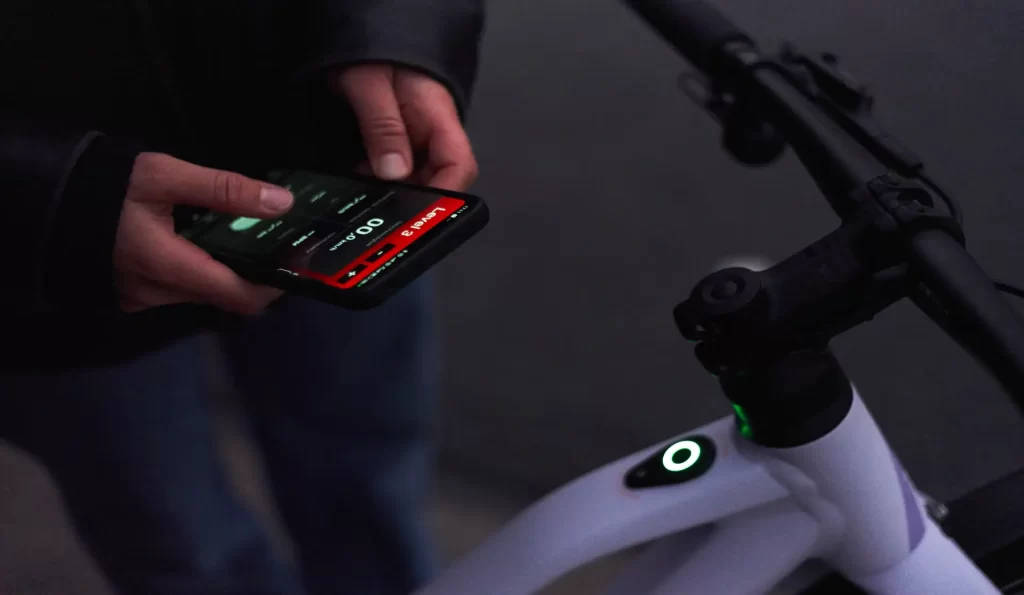
Why Connectivity Matters for Lightweight eBikes
Not all connected eBikes follow the same philosophy.
Some systems add increasingly large displays, controls and hardware in pursuit of more features.
However, many riders are looking for something different.
They want:
- Low overall weight
- Clean bike aesthetics
- Natural riding characteristics
- Minimal cockpit clutter
- Smart functionality when needed
This is where connectivity becomes particularly important.
Rather than adding more physical hardware, a connected ecosystem allows information to be delivered through devices riders already carry, such as smartphones.
The result is a cleaner and more integrated riding experience.
For lightweight eBikes, connectivity is often the most efficient way to add functionality without compromising the characteristics that make lightweight systems appealing in the first place.
What your connected eBike tracks on every ride
Sensors collect this information continuously, from the first pedal stroke to the last.
The MAHLE Perspective: Smart Connectivity Without Complexity
As connectivity becomes increasingly important, the challenge is no longer adding features. The challenge is making those features genuinely useful.
Within the MAHLE SmartBike Systems ecosystem, the emphasis is placed on delivering intelligent functionality while preserving the natural riding experience associated with lightweight eBikes.
Through the My SmartBike App, riders can access tools designed to make everyday riding simpler and more informed.
Key features include:
- Navigation support
- Detailed ride statistics
- System management
- Personalised riding insights
- Smart Assist functionality
Instead of overwhelming riders with unnecessary complexity, the objective is to place relevant information where it is most useful and accessible.
This approach aligns with a broader principle within lightweight eBike design: an intelligent eBike should also remain light, integrated and enjoyable to ride.
Technology should support the experience, not dominate it.
Future Trends in Connected eBike Technology
Connectivity is expected to play an even larger role in the coming years.
Several developments are likely to shape the future of smart eBike technology.
Artificial Intelligence
AI-driven systems may help riders optimise routes, energy consumption and assistance settings automatically.
Predictive Riding Assistance
Future systems could analyse rider behaviour and terrain in real time to provide more accurate support recommendations.
Enhanced Navigation
Navigation platforms will likely become increasingly integrated with battery management and route planning.
Deeper Ecosystem Integration
Connected eBikes may interact more closely with fitness platforms, smart mobility solutions and urban transportation networks.
Smarter Performance Analytics
Future ride data analysis could provide deeper insights into efficiency, rider behaviour and long-term battery usage.

Frequently Asked Questions
What is a connected eBike?
A connected eBike is an electric bicycle that communicates with smartphones, applications and digital platforms to provide navigation, ride statistics, battery management and other smart features.
What is the difference between a connected eBike and a smart eBike?
The two terms are often used interchangeably. Generally, a connected eBike focuses on communication and data sharing, while a smart eBike may also include intelligent assistance features and automation.
Do connected eBikes need a smartphone?
Most connected eBike systems are designed to work alongside a smartphone, although some functions may also be available directly through displays or integrated control units.
Can a connected eBike improve battery range?Connectivity itself does not increase battery capacity, but ride analytics, navigation and energy management tools can help riders use available energy more efficiently.
What kind of data does a connected eBike collect?Typical data includes speed, distance, elevation, battery consumption, route information, ride duration and assistance usage.
Is a connected eBike worth it?
For most riders, yes. Connectivity improves convenience, ride planning, battery management and the overall ownership experience.
Can connected eBikes support navigation?
Yes. Many connected eBike ecosystems offer route planning and navigation directly through dedicated mobile applications.
Why is connectivity important on lightweight eBikes?
Connectivity allows advanced functionality without adding significant weight, large displays or unnecessary components, helping preserve a natural riding experience.
Why connectivity benefits every rider
A connected eBike is far more than an electric bicycle with a companion app. It is a digital mobility platform that combines connectivity, navigation, ride statistics and smart assistance features to create a more personalised and informed riding experience.
As eBike technology continues to evolve, riders increasingly expect seamless access to data, route planning and intelligent support. Connectivity meets these expectations by helping riders understand their journeys, manage energy more effectively and get more from every ride.
- More personal — the bike adapts to the rider, not the other way around.
- Better decisions — plan routes, battery use and assistance with real data.
- More convenience — automatic ride recording and simple software management.
- Greater engagement — tracking progress keeps riders motivated to ride more.
For lightweight eBike systems, the benefits are even more compelling. By delivering advanced functionality through a connected ecosystem rather than additional hardware, riders can enjoy smart features without sacrificing simplicity, integration or riding feel.
Ultimately, the most successful connected eBikes are those that make technology almost invisible, providing valuable information and intelligent assistance while keeping the focus exactly where it belongs: on the ride itself.

Playing this video loads content from YouTube, which may set cookies. Privacy policy

Playing this video loads content from YouTube, which may set cookies. Privacy policy